Thursday, 12 February 2009

Relationship Management

How does your organisation deal with Relationship Management.

This is a key competancy that is ofter overlooked or under resourced.

How do you manage your supply base or customer base.

Is there a specific person who does this.

What skills do they have - are they appropriate.

Supplier Governance and Supplier relationship management are areas to invest in during a downturn.
Do it today

Friday, 26 September 2008

GlaxoSmithKline Clinical Study Register Launches Today

Today marks a new dawn in Clinical Trial reporting and transparity.
Moving forward from the GSK Clinical Trial Register, the new site is called GlaxoSmithKline Clinical Study Register.
More information for the public, patients, media and the medical professionals.

http://clinicalstudyregister.comhttp://clinicalstudyregister.com

Monday, 22 September 2008

Books

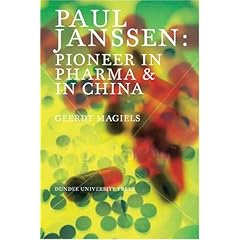
Could be an interesting book


What are you reading at the mo...

This looks good

Janssen

Pharma Giles

The " Tribute to PharmaGiles " post has become very popular.
It has been mentioned on several other blogs already

Does anyone else have any PharmaGiles memorabilia/memories/pictures/documents etc.

Please let me know if you want the pdf of Pharma Giles Childrens Book of Medicine.

Link

Thursday, 28 August 2008

Backgammon


Friday, 1 August 2008

Supplier Performance Monitoring

The purpose of Supplier Performance Monitoring is to:
• Clearly communicate ‘COMPANY X’ supplier performance goals and expectations.
• Jointly agree a supplier’s current supply capability and performance whilst identifying areas for improvement to meet ‘COMPANY X’’s needs.
• Provide a framework to identify performance gaps for planning improvement action.
• Capture actual supplier performance for feedback to ‘COMPANY X’ and supplier stakeholders.
• Facilitate a review of supplier performance against targets and best in class.
• Maintain a record of supplier performance against Business Requirements over time.
• Allow easy comparison of performance between similar suppliers.
When to initiate Supplier Performance Monitoring

Ideally Supplier Performance Monitoring should be outlined to potential new suppliers at the earliest opportunity. This will be in the information gathering stage of ‘PROCURMENT PROCESS’ as part of Supplier Conditioning. Full details will then be communicated in RFP/ RFQ's with formal agreement occurring within a Contract or Service Level Agreement (SLA). By positioning the principle of measurement and monitoring early in a supplier relationship, the importance of continuous improvement will be conveyed and adequate resources can be allocated to ensure ongoing professional performance management.

The tool can also be introduced into an existing supplier relationship where structured performance monitoring has not previously occurred. Senior management influence is recommended to ensure top level support to the principles of measurement and action planning for improvement. In these circumstances the tool provides a powerful means of re-focusing suppliers on current Business Requirements and priorities, reassessing their ability to deliver against these whilst assigning actions to hit higher performance levels.

Outsourcing and Offshoring

Purpose of outsourcing/offshoring and its importance to COMPANY-X

Offshore outsourcing is used to source services for non-core COMPANY-X activities from lower cost regions, thus ensuring COMPANY-X's competitive advantage.

COMPANY-X operates, and therefore sources materials and services, in markets where outsourcing opportunities have been identified, expanded and maximised. It is likely that this trend will grow; therefore we need to proactively seek and exploit opportunities to allocate work to strategic suppliers on key parameters:

• Assurance of Supply
• Cost
• Quality
• Service
• Innovation
• Market maturity and competitiveness
• Fit to business requirements

Criteria used to identify outsourcing/offshoring opportunities

As COMPANY-X procures product, goods and services from many thousands of suppliers, it may not always be possible to use outsource/offshore sourcing. However, COMPANY-X Procurement’s intention is to focus on appropriate categories and suppliers using specific selection criteria to successfully exploit appropriate opportunities.

High-level outsourcing success factors include:

• High level senior management sponsorship as a pre-requisite.
• Consensus around a sound and comprehensive sourcing strategy before attempting outsourcing.
• Effective change management and governance plans, essential for sustained value creation and continuous improvement.
• Analytical and experiential skills to understand multiple dimensions of complexities and options created by BPO, offshore, and multi-process outsourcings, and cultural/other client dynamics.
• Tailored and sustainable outsourcing solutions designed to match current and future needs to the individual supplier’s strengths.
• Outsourcing as a win/win proposition for the buyer and supplier. Vehicles for future value creation and capture (defined initiatives, investment models, and gain-sharing principles) beyond today’s baseline cost improvement must be in place.
• Always acknowledging that trust with the outsourcer must be nurtured throughout the process as a key element to success.


Additionally, for outsourcing/offshoring to be successful, steps must be taken to prevent common pitfalls. These include:

• Lack of clear Objectives
• A poorly researched or light fact base
• Poor understanding and communication of work processes being considered for outsourcing
• Poor understanding and communication of the appropriate Key Performance Indicators
• Little to no Governance or Change Management
• Significant variation in deployment methodology leading to process and contractual gaps
• Poor staff communications (particularly if there are staff implications)

Contracting Basics

What is a contract?

• A written or spoken agreement between two or more persons or entities which creates a legal obligation to do or not to do a particular thing.
• Contracts can include not only what you write, but what you do and say.
• Written contracts seek to record the basis on which parties have agreed to act

For a contract to be formed there must be an offer, with certainty of terms, followed (maybe after various counter-offers) with acceptance and, in most jurisdictions, consideration. Consideration is something of value, which may be nominal, and does not need to be money.


Why do you need a contract?

You need a contract to protect COMPANY-X’s business by:
• creating written evidence of what was agreed upon to avoid disputes or misunderstandings later on;
• defining the obligations of the parties and identifying all the key terms relating to the arrangement up front;
• identifying and allocating management of risk and apportionment of liability between the parties;
• providing a supportive operating framework (making your supplier management easier in the long run);
• providing for a system to resolve disputes; and
• modifying terms that would otherwise be imposed by law.


Different types and forms of contract

You may work with many different types of contracts that are defined by the type of purchase. These may include software contracts, supply contracts, equipment contracts or services contracts. There are also different forms of contracts. The most common are purchase orders, short form contracts and long form contracts.

Purchase Orders are for once-off agreements.

Short Form contracts are best for low spend, low risk, low complexity or short arrangements.

Long Form Contracts are best for high spend, high risk, high complexity or longer arrangements.

Statements of Work/Task Orders

You may also encounter other legal documents specifically Statements of Work or Task Orders. A Statement of Work or Task Order is a document that references a Master Contract and sets forth the specific deliveries or services that a Supplier would provide under the Master Contract. You may hear the terminology Statement of Work (SoW) and Task Order used interchangeably. The correct terminology to use will be that specified in the Master Contract. The two documents together comprise the full contract.

Statements of Work/Task Orders (Con’t)

If COMPANY-X attempt to make a claim that a supplier did not perform according to the Master Contract, then the Statement of Work or Task Order will serve as the main evidence of what the parties agreed in relation to the specific delivery or service.

Letter of Intent

You may also hear the term ‘Letter of Intent’. Procurement Policy P511 establishes the COMPANY-X position on issuing letters of intent. If a letter of intent is needed you must first contact your PCMLT member and then COMPANY-X Legal prior to its use or release to the supplier.

A letter of intent indicates an intention to negotiate and perhaps the key matters on which you are prepared to negotiate. They do not indicate an intention to be contractually bound to one another. Letters of Intent require very careful drafting to ensure that a Contract is not formed.
You may sometimes hear a Letter of Intent referred to as a MOU or ‘Memorandum of Understanding’. These terms mean the same thing.